 Let's Talk
Let's Talk
Let's Talk
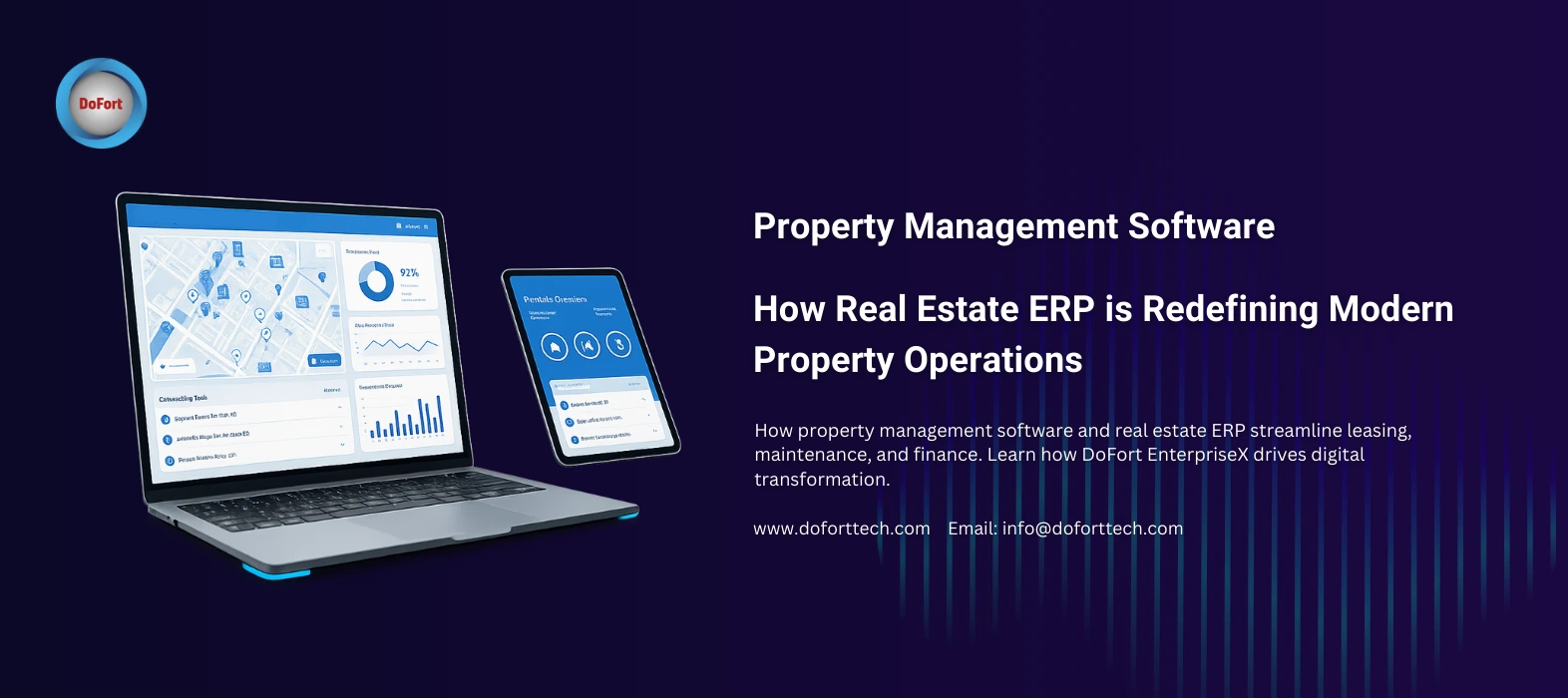
The property management sector has witnessed a significant technological transformation. Property management today
encompasses more than collecting rent payments and maintaining property records for residential, commercial, and mixed
properties. Property managers are required to deal with leases, tenants, and property performance for more than one
property location.
Traditional methods using spreadsheets and isolated applications find it difficult to cater to these demands. This is why
Property Management Software
using real estate ERP solutions has now become the need of the time. In the following article, we will discuss how real
estate software impacts property operations, the challenges that it resolves, and the importance of using the best property
management software for growth.
As property portfolios grow, operate complexities intensify. Inefficiencies of manual processes beget data silos, inaccuracies, downtime, and a lack of visibility into how operations are going. Necessities have escalated to faster turnaround times, more visibility, and more convenience.
Property management software provides a centralized digital platform that connects people, processes, and data. When integrated with Real Estate ERP, it enables property managers to operate more efficiently, reduce costs, and improve tenant satisfaction.
With multiple properties to handle in the organizational setting, the advanced property management software provided by ERP solutions has become a necessity and not an option.
Property management software, in particular, is designed to manage day-to-day property operations. These include leasing and tenant communication, among other functions, onto maintenance, and also extended functions related to collecting rent. Real estate ERP takes it up a notch by putting core business functions like finance, procurement, HR, asset management, and compliance in one big system.
Together, today's real estate software supports the entire property lifecycle-from acquisition and leasing through to operations, financial reporting, and portfolio analysis.
Many property management firms still rely on legacy systems or manual workflows. This creates several operational challenges:
These challenges highlight the need for a unified real estate ERP software solution.
When evaluating the Best Property Management Software, organizations should look for:
These features define modern, enterprise-ready Real Estate Software.
Cloud technology has reshaped the real estate industry. Cloud-based property management software offers:
This makes cloud-enabled Real Estate ERP Software the preferred option for future-ready property businesses.
Organizations that adopt ERP-driven real estate software experience measurable benefits:
These benefits demonstrate why advanced ERP software for property management is becoming the industry standard.
As property operations grow more complex, relying on disconnected tools limits efficiency and scalability. This is where DoFort EnterpriseX emerges as a powerful, next-generation property management software and real estate ERP platform.
DoFort EnterpriseX offers a unified, cloud-based ERP solution purpose-built to meet the evolving needs of property managers, real estate developers, and asset owners.
Eliminating data silos and automating key workflows, DoFort EnterpriseX digitally transforms property management in a way that helps organizations act smarter, faster, and competent.
In the current competitive scenario, the best property management software will decide the long-term success of any real estate agency. Powered with advanced ERP capabilities, an industry-focused design, and scalable architecture, DoFort EnterpriseX empowers property businesses for operational excellence, financial control, and sustainable growth in the digital-first world.
Welcome to DoFort !

